Richard P. Kendall
Life & Career
Dr. Richard Kendall has had a varied career in what is now called computational science. It began when Seymour Cray still worked for Control Data (and the CDC 1604 was a high performance computer).
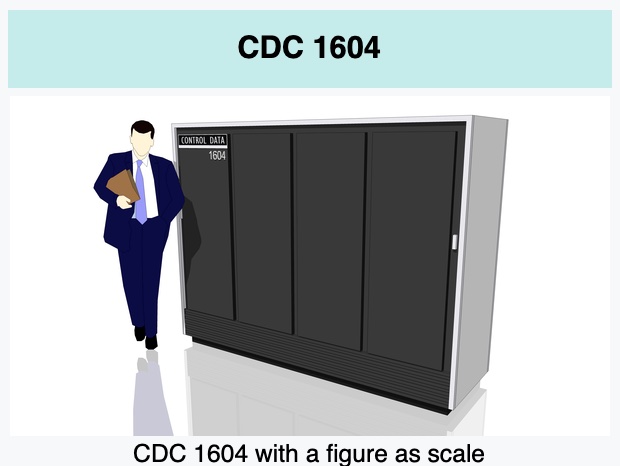

Richard’s interest in science began in Junior High School and blossomed in High School.
The first computer he ever saw was the IBM 704. It inspired him to construct an analog computer that could multiply two numbers more intuitively than a slide rule. (He still has his slide rule.)
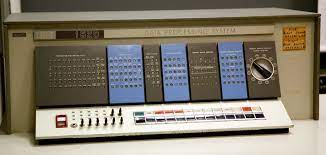
Richard’s real introduction to computing began with his Master’s thesis at the University of Texas at Austin using FORTRAN IV with the CDC 1604. The use of a computer in number theory, the topic of his Master’s thesis, was novel then.
He began his professional career at Esso Production Research Co. in Houston after completing a Ph.D. in Mathematics (Numerical Analysis) at Rice University in 1972 (this was the IBM 7090 era at Esso).

Following a 23 year career in the Oil & Gas industry (ending with supercomputers like the Cyber 205, the CRAY-1S, and the emerging Cray X-MP), he joined Los Alamos National Laboratory in 1995. In 1997 Richard became Director of the Computational Testbed for Industry at Los Alamos, which offered access to then advanced supercomputers like the CM-5, pictured below. He became CIO for the entire laboratory in 1999.
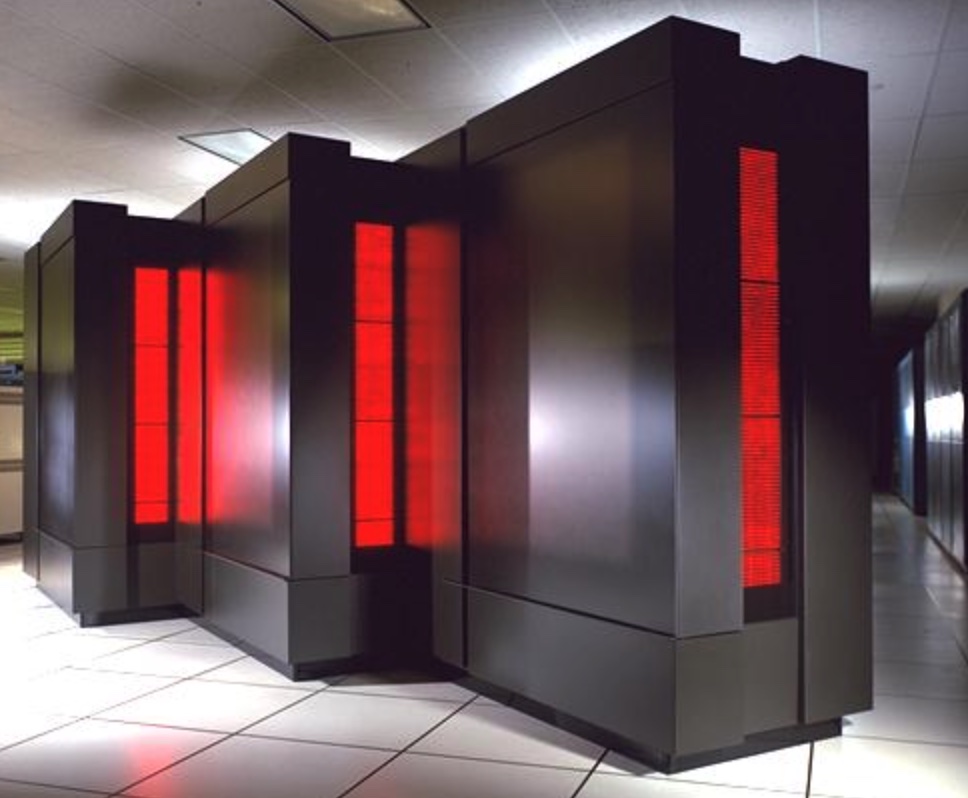
After retiring from Los Alamos (University of California), Richard joined the Department of Defense’s CREATE project (see Project page). A member of IEEE and SPE/AIME, he has published in the numerical analysis, petroleum engineering, and software engineering literature (see Publications page).
Recent Accomplishments
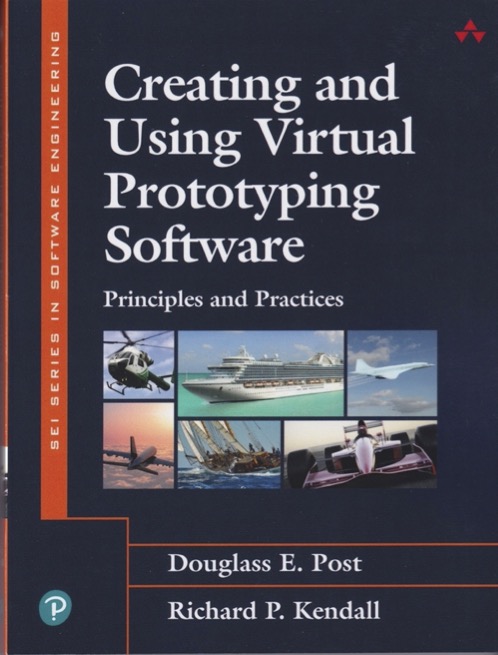
This book provides guidance for engineers and scientists who want to acquire or develop software to improve the competitiveness of their organizations with virtual prototypes. Virtual prototypes replace physical prototypes in the product development process. They are an extension of computer-aided design that allows product developers not just to visualize product designs, but to predict their performance, using physics-based software tools, before anything is manufactured.
Podcast
New Publication (see page 124) focused on DevOps
Contact Richard



 RPK
RPK 